What Are Nitrates?
Found naturally in groundwater and surface water, usually at levels safe for human health.
High concentrations may stem from chemical fertilisers, animal waste, or industrial runoff entering water sources.
Seasonal increases can occur when rainfall disperses fertilisers into water bodies.
Excessive nitrates can lower blood oxygen levels, posing health risks.
Associated with ‘blue baby’ syndrome in infants.
Safe thresholds: 50 mg/L for nitrate (NO3) and 0.5 mg/L for nitrite (NO2).
Purity
Provides a consistent, high-quality water source free of contaminants, serving as an ideal base for processes requiring precise water quality control.
Chemical-Free
Reverse osmosis is a physical filtration process, eliminating the need for chemical additives.
Reliability
Offers a dependable, on-demand solution for industries requiring ultra-pure water.
Cost-Effectiveness
Provides an efficient and economical method for producing demineralised water tailored to specific operational needs.
How Are Nitrates Treated?
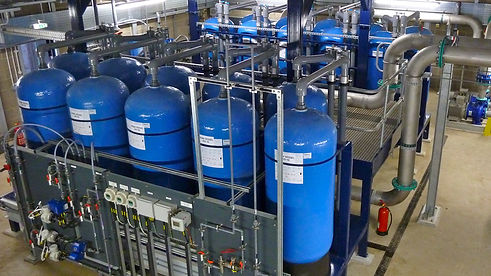
Treatment options include ion exchange resins, distillation, and reverse osmosis.
Ion exchange resins are the most widely used and cost-efficient method.
Nitrate-specific resins can remove up to 90% of nitrates.
Automated self-cleaning systems regenerate when capacity is reached.
Regeneration involves sodium chloride (NaCl), utilising the chloride ion in the process.